
Academy of Fine Arts Alumn Xiao Zhiyu at Jan van Eyck Academie residency 2025
Residency Notes: Between Clouds, Screens, and Distance
During my residency year at the Jan van Eyck Academie, what shifted was not so much the form of the works I produced, but the ground on which I was able to stand while thinking about them or about the position from which I speak as an artist at all. I thought about my dependency on concrete production plans, timelines, and visible outcomes, and how difficult it was actually for me to remain inside doubt, hesitation, or directions that did not yet announce themselves clearly.
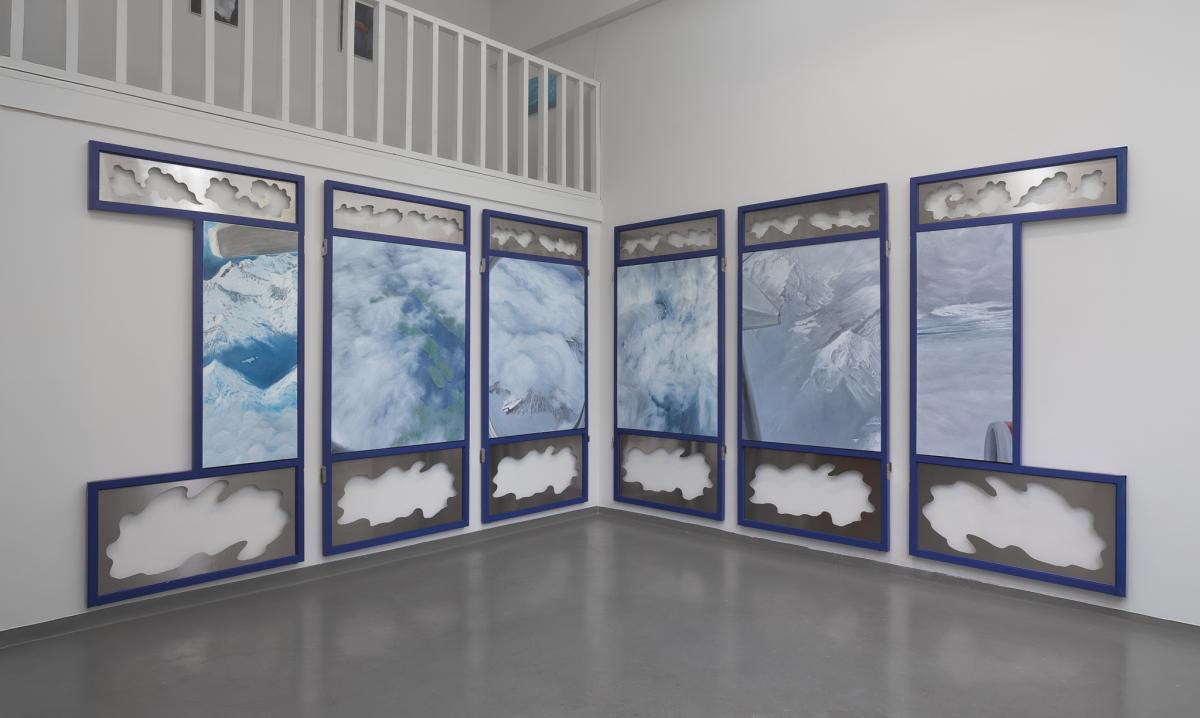
I think my Open Studios presentation kinda condensed some of these conditions, where I developed the project Traveling While Laying Down. The work tried to resist the attempt to emerge as a single effort of making visible a bunch of researches and knowledges on landscape, power, technology, colonialism and capitalism (kinds of frameworks I had previously relied on a lot). It instead accumulated almost accidentally, through minor gestures and intervals, of daily observations and self-questionings: walks after rain, endlessly rotting-scrolling, smoking in the garden after exhausted painting or watching the clouds drifting. These moments, which in my notes often appear as fragments of atmosphere, unfinished conversations, or bodily fatigue, became a more grounded sense of asking what is the relationship with landscapes myself, of what relation to landscape is still possible from where I am.
At Jan van Eyck, the vibrant discursive environment pushed me to go further in questioning the usefulness of artistic practice itself. I began wondering whether what I do merely upholds existing structures of language that endlessly rehearse the modernist myth of artistic genesis, affirm taste structures of upper-middle-class audiences, or simply cater to institutional mechanisms that channel grants and financial flows into cultural capital. If this were the case, what would remain genuinely valuable for me? Do memories, travel, digital archives, and historical narratives hold any real value at all (even the word “value” already revealing the system we inhabit) and if so, how could such unstable material remain present within a painted surface without immediately becoming legible?
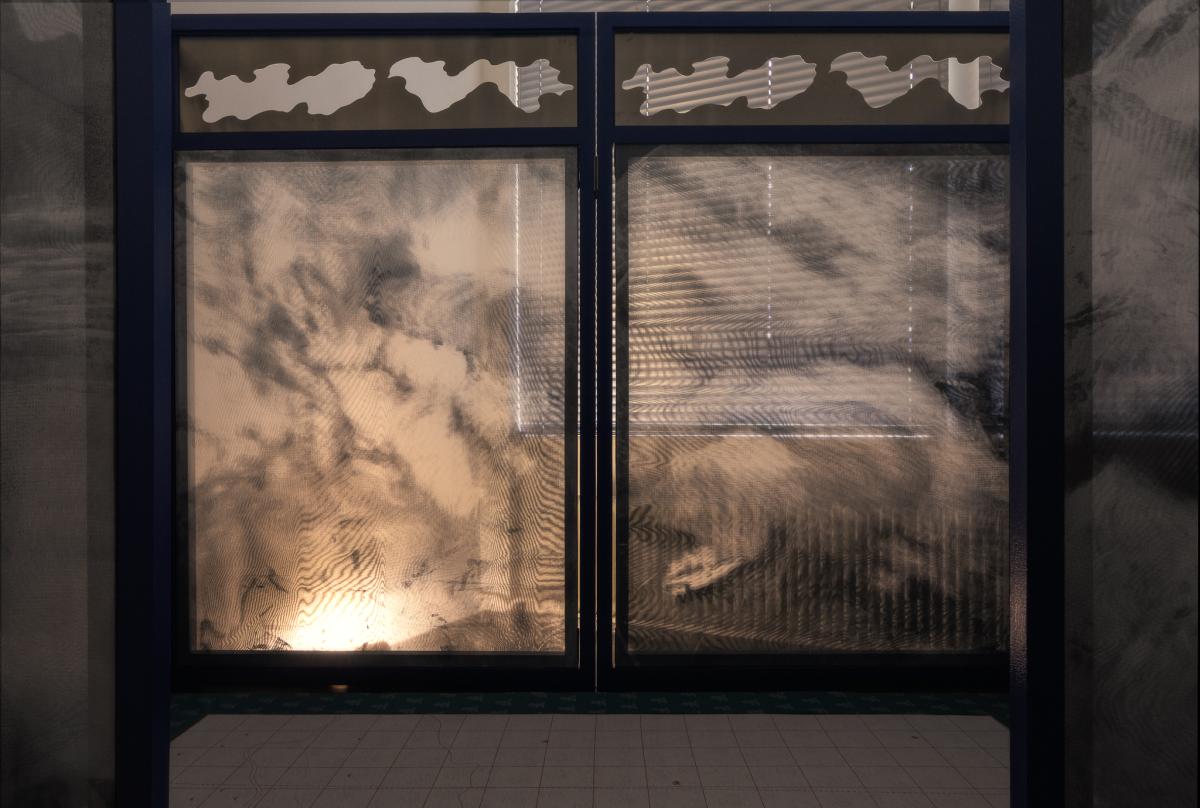
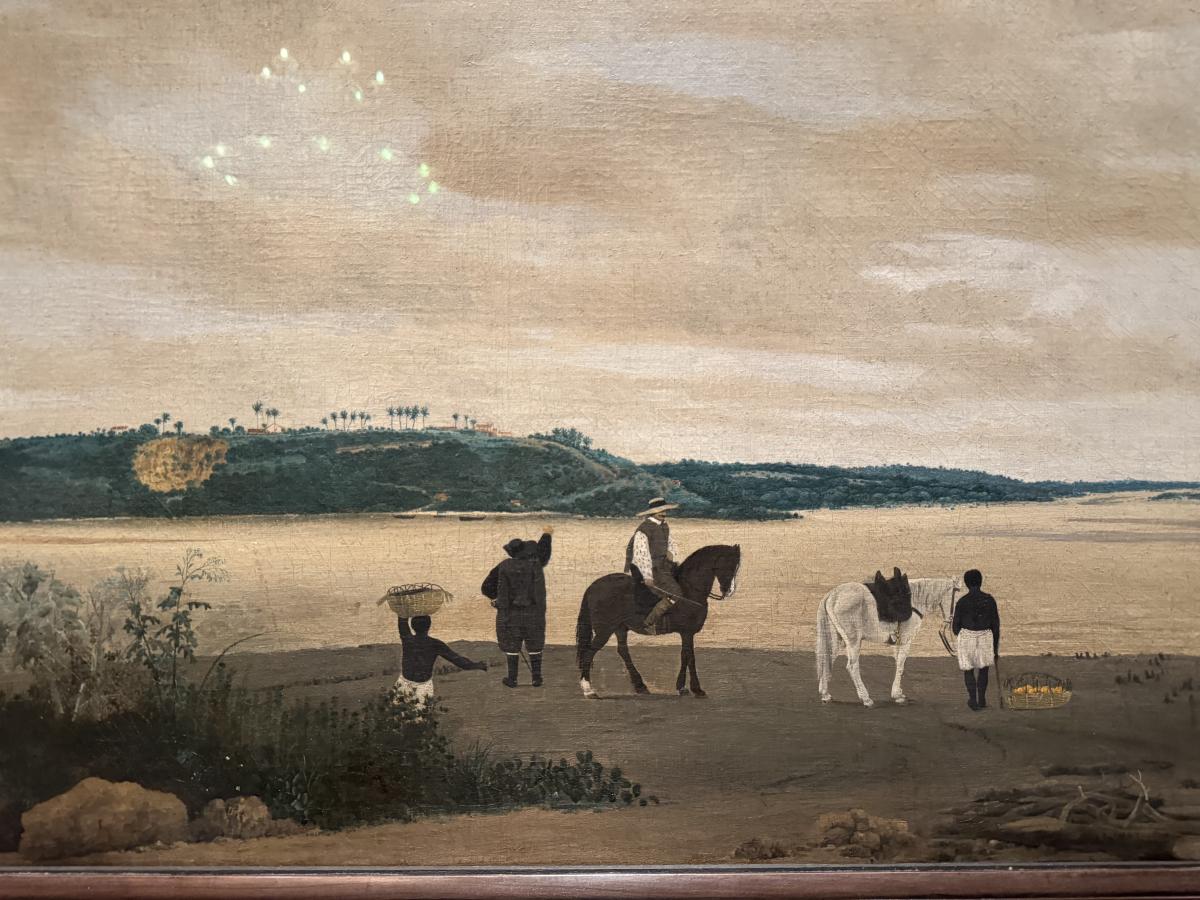
These thoughts became central to the Open Studios installation. I was increasingly interested in how contemporary image-making participates in invisibility, and to the uncertain status of what we call artistic experience. In one of my research reflections, I wrote about encountering a colonial Brazilian landscape painting by Frans Post, whose serene sky seemed to erase the violence that historically enabled the scene itself . That experience made my summer obsessed with clouds, also in my painting, as if they carriers a sort of historical distance, soft surfaces under which obscure forces operate.
The Jan van Eyck context mattered because it allowed this transition to remain unresolved. Conversations with advisors and peers often produced more disorientation than clarity. At times this felt paralysing and exhausting. The culture of reflection can slow production almost to a standstill, dissolving the reassuring sense that one knows what one is doing. Yet it is exactly this slowing, this prolonged suspension, that in retrospect feels like the residency’s most durable professional condition.
The Open Studios moment itself exposed another tension that was important for my thinking: the exhibition as a system of display. I kept returning to the suspicion that painting and exhibiting might always involve a gentle form of violence — the quiet conversion of lived, unstable experience into objects that can be stabilised, labelled, owned, and safely viewed at a regulated distance. Presenting the work publicly inside the residency building made this question concrete. I was simultaneously grateful for the visibility and uneasy about the transformation of fragile personal material into stable cultural products.
Looking back, I now allow myself to grow thoughts through accumulation – travel notes, historical research, digital image archives, technical experiments, fragments of text rather than forcing them prematurely into finished form. To make art is to question what I am really interested in and how can I really constructing my personal frameworks in which images, memories, and histories can collide together, then maybe something nice appears.
The support from Saastamoinen Foundation and the University of the Arts Helsinki made it possible for me to fully inhabit this transformative phase of working. The outcomes of the residency are still unfolding in my current projects, and I believe it would last for a long long time: from making paintings as isolated objects toward building artistic systems capable of holding uncertainty, distance, and layered time.
Taideyliopiston alumniblogi
Alumnimme ovat äänessä tässä blogissa ja tuovat uusia tuulahduksia taiteen työkentiltä.
Uusimmat julkaisut
-
Academy of Fine Arts alum Paola Guzmán Figeroa at LIFT residency in Toronto 2025
-
Esittelyssä Fair sculpture -residenssiin valittu taiteilija Juan Kasari
-
Lotta Hurnanen, selected for the LIFT residency, intertwines analogue film and gardening
Seuraa blogia