
Art-Based and Embodied Finnish Language Learning
In this text, Uniarts Helsinki’s Finnish language teachers Laura Lehtinen and Sanna Teerenhovi reflect on the pilot course Finnish Through Art-Based Practices that took place in autumn 2025. Embodied language learning supports participants’ agency and brings more joy to language learning. Next art-based Finnish course will be part Open university’s studies in May 2026.
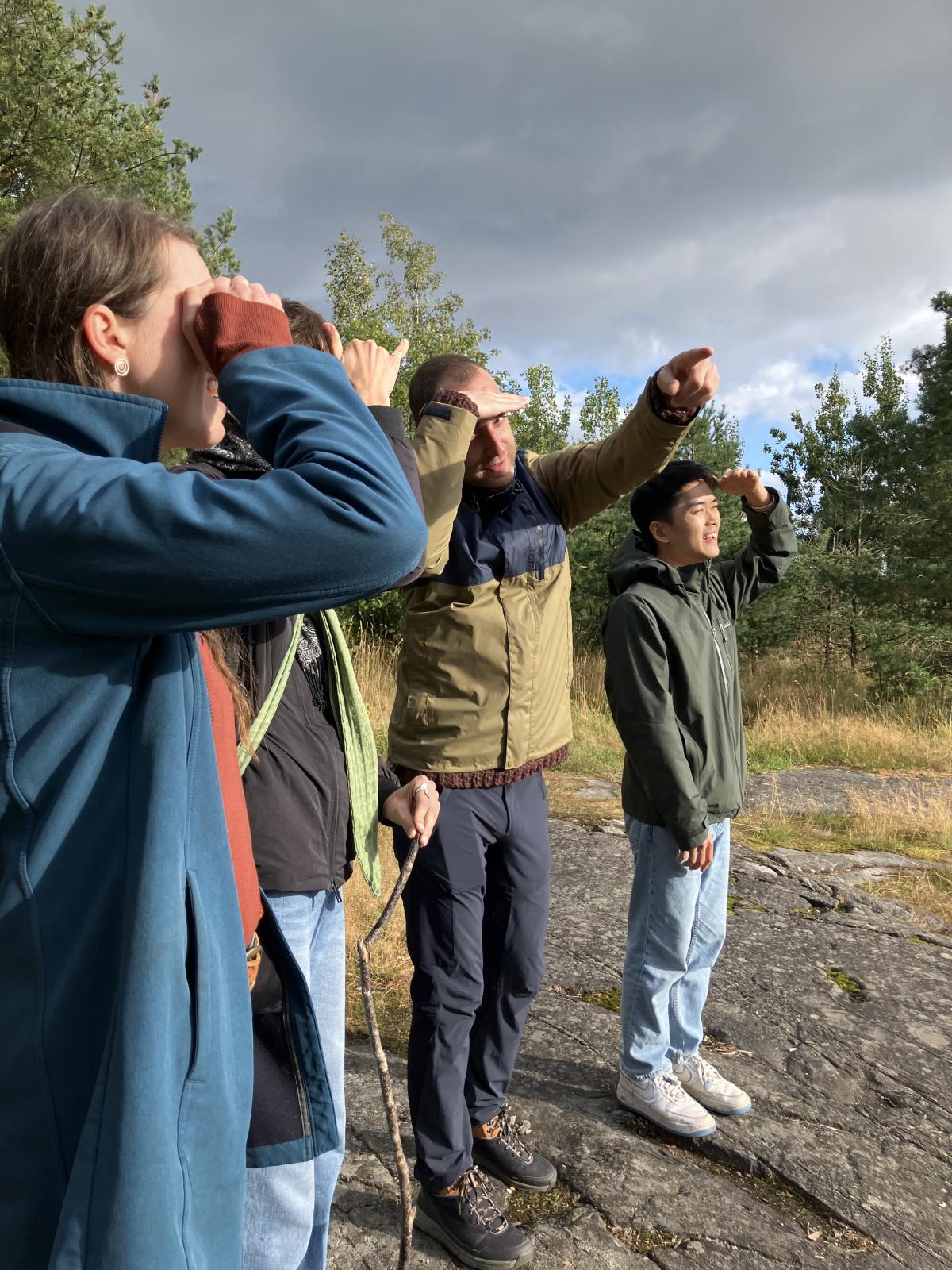
In autumn 2025, the University of the Arts Helsinki organized, for the first time, an experimental language course: Finnish Through Artistic Practice. The course was inspired by the research project ELLA – Embodied Language Learning through the Arts, especially by the embodied language teaching methods presented in its final seminar. After the seminar, Alyssa Coffin, then a master’s student at Uniarts Helsinki, contacted us, Finnish teachers, and proposed a Finnish course where learners could study the language through artistic activities. In this text, we briefly introduce how our experimental course was carried out. The aim is to explore the observations more deeply in later blog posts.
The name of the course was Learn Finnish Through Art-Based Practices. From the beginning, it was clear to us teachers that the course would be led by artists and language learners who were current students or alumni of Uniarts Helsinki. In addition to Alyssa Coffin, the other course facilitators—Lola Barraud, Devina Boughton and niko wearden—were all participants in our Finnish courses. They are artists from different fields and at different stages of their Finnish learning journeys, each with their own distinct artistic practice. The facilitators designed their own teaching themes, content, and approaches. Our role as Finnish teachers was to provide linguistic and pedagogical support both during the planning phase and in the teaching sessions. In addition, we acted as course facilitators, handled funding negotiations, communication, and other practical arrangements. The course participants were Uniarts’ students and staff members, Finnish learners of very different levels, working in various artistic fields. English was used as a supporting language, and participants’ English proficiency also varied.
The course was structured around four different themes.
Alyssa Coffin shared her embodied mapping practice in a forest environment. Her sessions focused on learning nature related vocabulary and rooting new words and phrases in the body through touch and other sensory experiences outdoors.
Devina Boughton’s sessions involved crafting zines and small pocket dictionaries for various situations (e.g., bike maintenance, commenting on social media, or expressing emotions) and writing collage poems.
Lola Barraud guided the participants (and us teachers) into compound word play inspired by Richard Scarry’s Cars and Trucks and Things That Go and by the linguistic experiments of writer Georges Perec.
niko wearden encouraged participants to reflect on their needs as language learners: What supports learning and what hinders it? How do I wish to be met as a learner? What do I need? Through questions like these, participants created accessibility riders—a kind of needs assessment for studying Finnish.
niko wearden and Dash Che have written an article on the topic, “Studying Finnish Feels Bad Sometimes: A Conversation About Affects of Migrant Language Learning in Finland”, published in the online journal Kieli, koulutus ja yhteiskunta.
The course evoked many emotions and thoughts in both facilitators and participants. We also discussed language learning and its challenges during the course. Many participants had previously struggled with studying Finnish. More traditional language courses had felt difficult, and some felt they were unable to progress in their Finnish language learning. This course brought back a sense of success and joy in learning. We Finnish teachers also felt that we learned a lot, reflecting on our own views of learning: what is really important and necessary in language learning? It was interesting to observe what the learners considered meaningful and what they chose to focus on in studying Finnish. In a way, we stepped aside and allowed the learners to lead, watching where their path would take them. Of course, we still acted as ”living dictionaries” and grammar resources when needed.
In the final reflection session, participants shared that through a playful approach—along with humour and embodied activities—their agency in both their learning and the Finnish language had strengthened. On the other hand, a course structured in this way does not necessarily lead to shared learning goals or rapid progress in, for instance, grammar. Instead, this format offers tools to find new ways of informal Finnish learning and integrate them into everyday life beyond the classroom. For us teachers, the most memorable feelings were joy and enthusiasm—among both participants and facilitators. The hands-on and action-based approach seemed to reduce barriers to participation and created space for each participant’s interests and needs as a learner.
The next Finnish Through Art-Based Practices course will be offered as an intensive course through Uniarts Helsinki’s Open University in May 2026.
Uniarts degree students can register via Peppi.
Avoimen kampuksen blogi
Tässä blogissa julkaistaan Taideyliopiston Avoimen kampuksen toimintaan ja kursseihin liittyviä kirjoituksia sekä avoimen yliopiston kursseilla syntyneitä tekstejä.
Uusimmat julkaisut
-
Art Pro highlights new possibilities for the arts in an uncertain economic climate
-
I ett osäkert ekonomiskt läge för konstbranschen visar Art Pro på möjligheter
-
Epävarmassa taidealan taloustilanteessa Art Pro osoittaa mahdollisuuksia
-
Työelämä NYT – yhdessä kohti vahvempaa osaamista vapaan taidekentän työelämässä
Seuraa blogia