
On Process, Collaboration and Agency – a Dancer-Performer’s Account on Artistic Collaboration
MA in Dance Performance student Laura Linna writes about her process in the piece ’fortuna!’, created during the Artistic Collaboration Projects (ACO) in the spring of 2026.
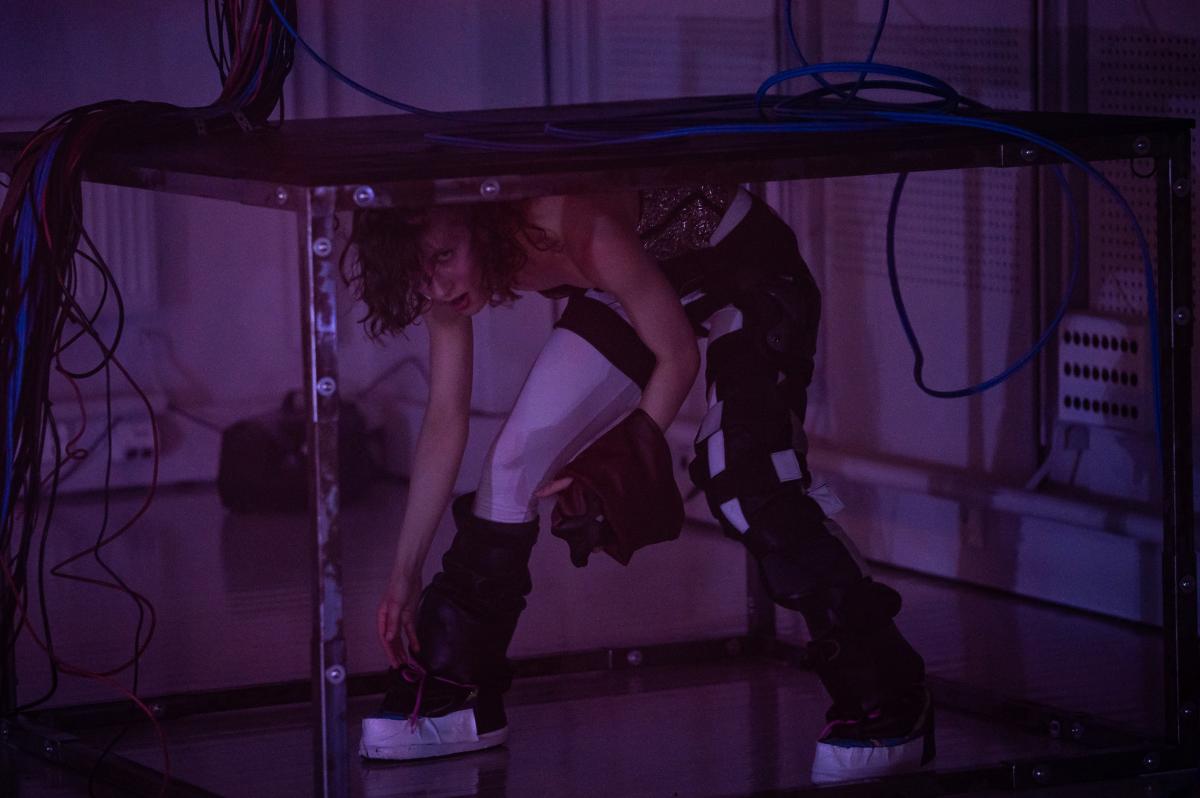
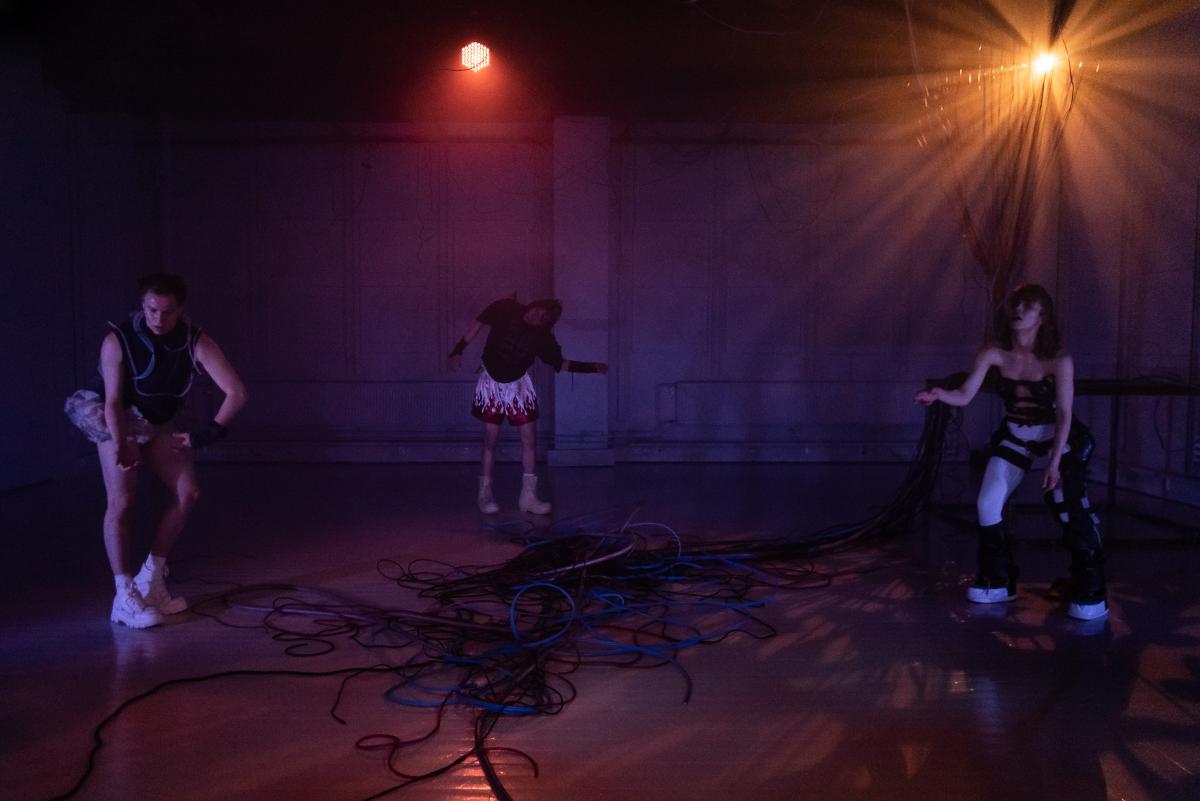
I took part in the Artistic Collaboration Project (ACO) course as an optional component of the Master’s programme in Dance Performance. The course provided a valuable opportunity to meet and collaborate with students from different programmes and disciplines at Uniarts and Aalto University. I joined the course as a member of the working group for fortuna! < who’s melting here? >, choreographed by Pontus Linder. Together, we created the world of fortuna! – an ambiguous technoscape in which three digital avatars find themselves idling, seeking connection, and testing the constraints of their positions.
How would you describe the performer’s position in this collaboration?
This project had one of the largest and most multidisciplinary working groups I’ve ever been part of. In my experience as a dancer-performer, projects can often be smaller in scale, and one takes responsibility for many aspects beyond dancing and performing, such as contributing to, or taking full responsibility for, the choreographic and dramaturgical process, production, marketing, and the various design elements of the piece. In this process, it felt like a privilege to work with individuals who had expertise and took responsibility in each separate field (choreography, dramaturgy, dance performance, sound, light, costume and scenography) and learning from each other. At the same time, our working group intentionally chose to involve one another in the different processes of each role – rejecting a strict division between roles while maintaining our respective responsibilities.
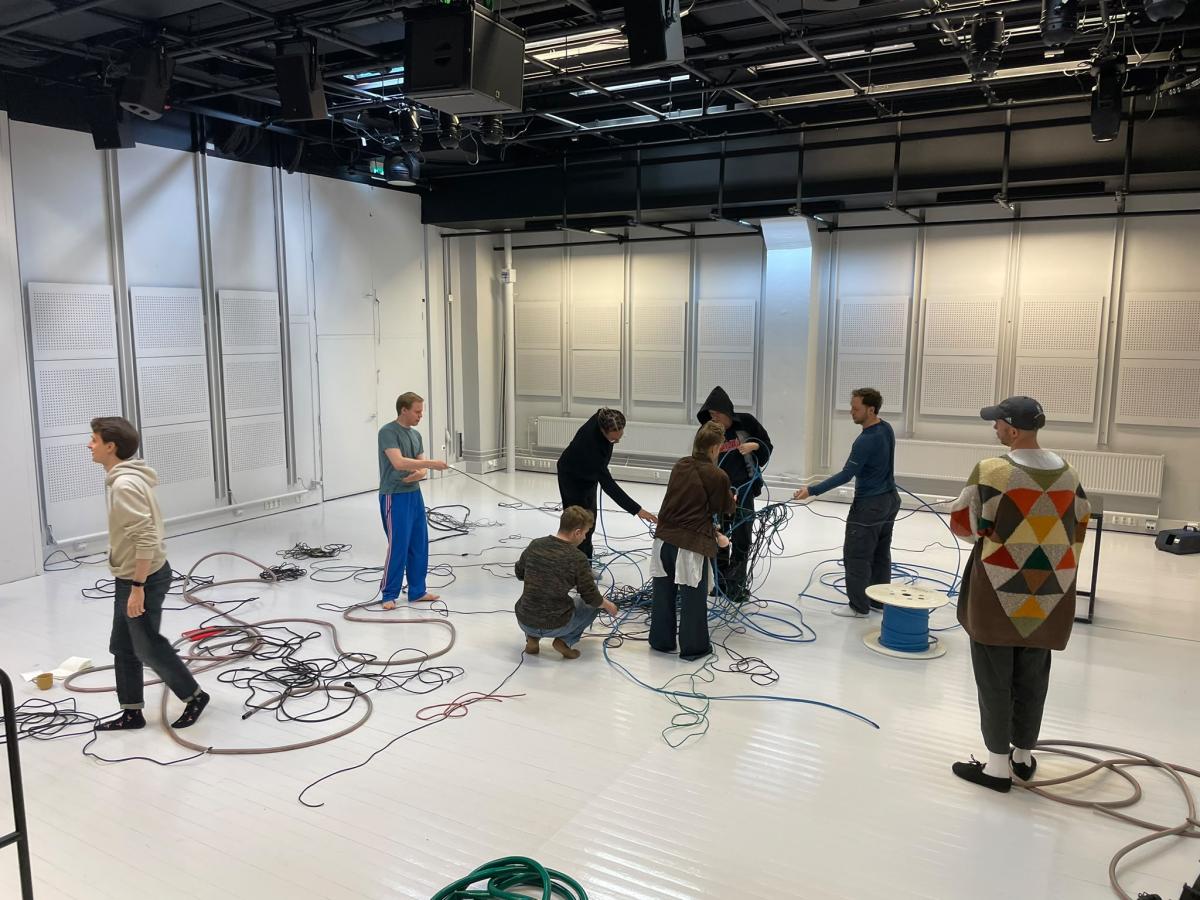
For me, it was important to be heard in the creative process, as I believe the development of an artwork concerns both the “inside” and the “outside” of the artistic world being created, understanding dramaturgy as movement between the in and out. Having dealt with these questions of dramaturgy from the performer’s position during my Master’s studies, it felt particularly meaningful to be able to expand that process into this collaboration. In addition, in fortuna!, the avatar’s agency became one of the key themes, so it felt only logical to address that agency through the performer’s role in the process as well as on stage.
Describe a moment that felt particularly meaningful to you during this process.
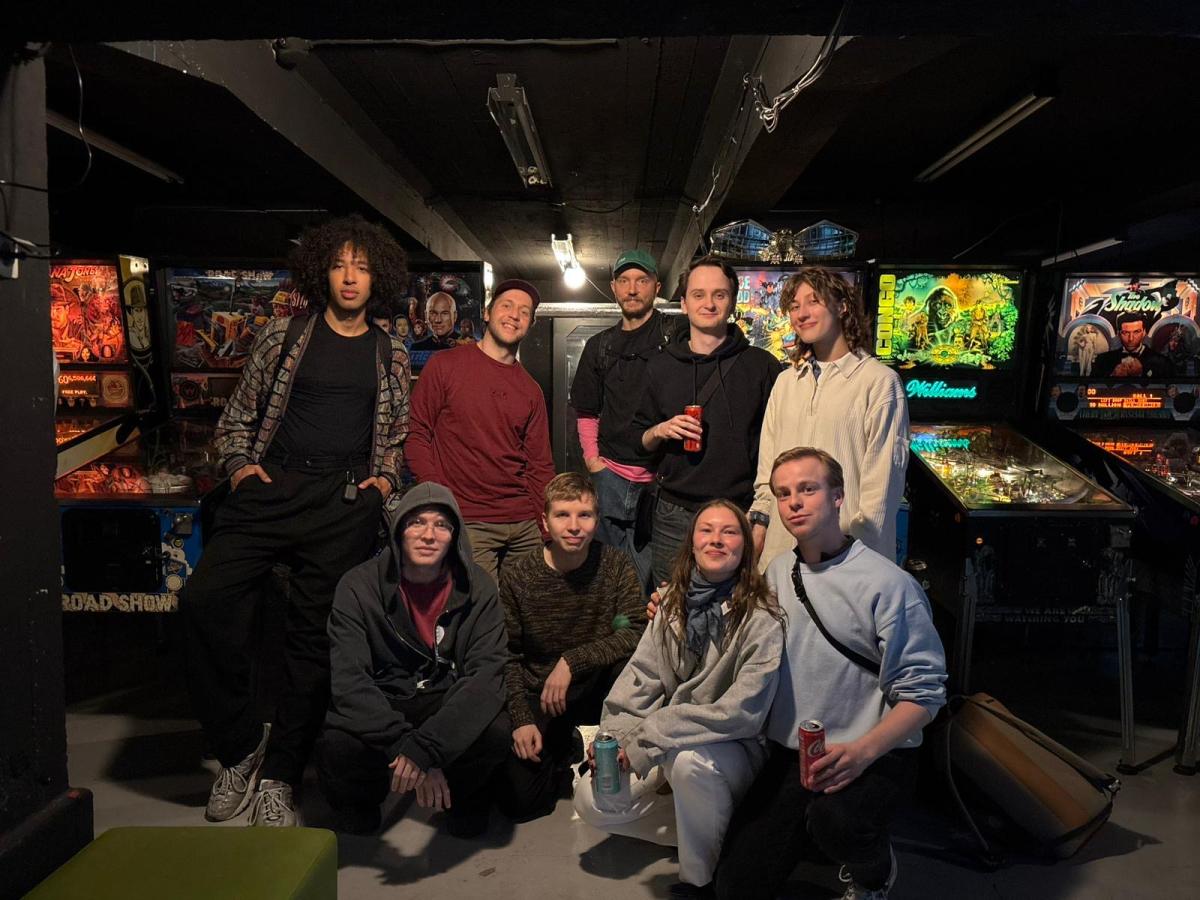
At the beginning of the rehearsal period, we spent a great deal of time getting to know one another, discussing and gathering inspiration, generating material, and generally exploring different ways of working. Each designer in our group facilitated a short workshop to help us brainstorm and become familiar with their medium through the themes we were exploring in the ACO. In turn, the designers often took part in the performers’ warm-ups and tuning-in practices. We also went on a field trip to Flipperikellari, where we spent time together outside the institution and explored the aesthetics and mechanics of vintage pinball machines as inspiration for the work.
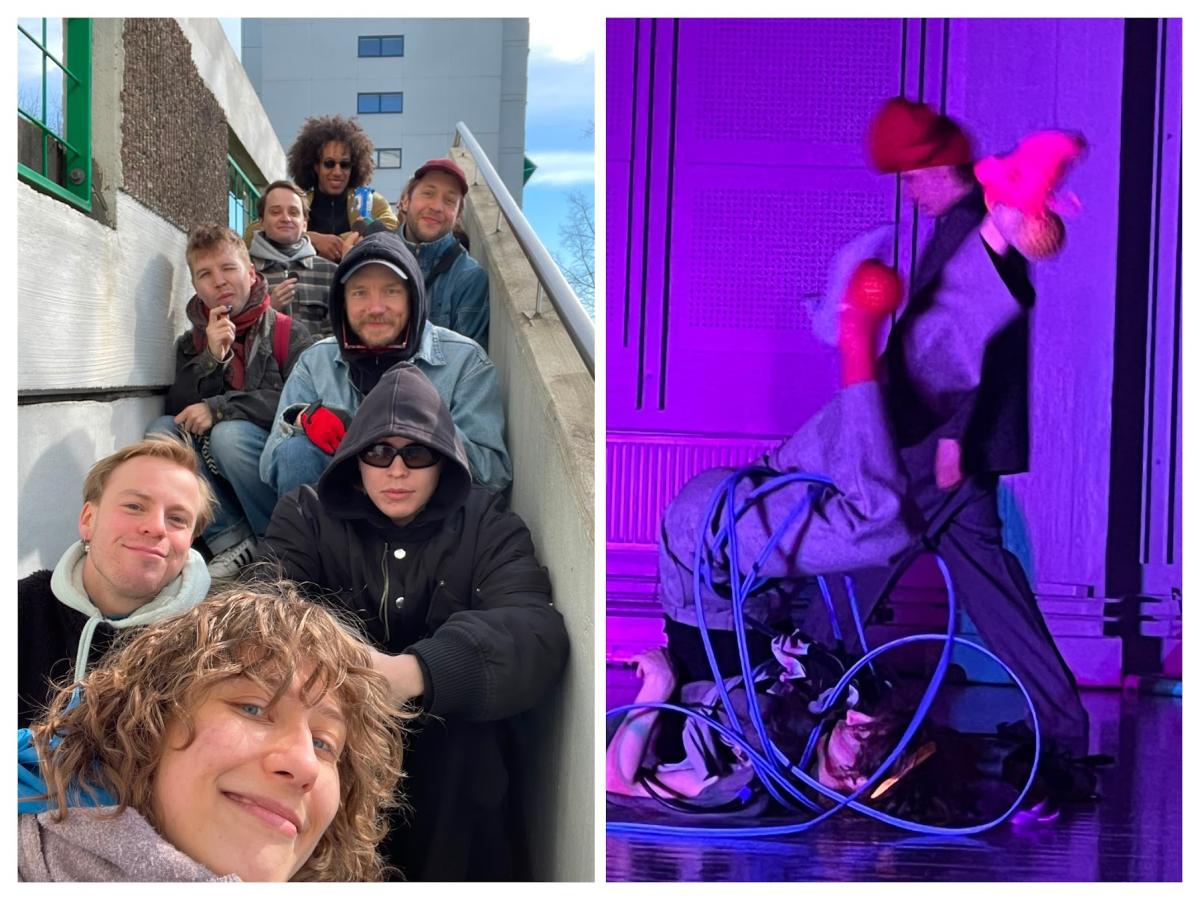
As a performer, it felt especially meaningful to be included in conversations around the different creative elements of the piece. These workshops helped build common ground within the group, encouraging dialogue across disciplines and strengthening the conceptual relationship between the work’s different aesthetic elements. This suggested a more horizontal hierarchy within the working group.
How to work in a sustainable manner as a performer in a collaborative process?
One question that came up for me in this role was how to work as a performer in a collaborative process in a sustainable way. Where does my responsibility end, and what are my priorities? While it felt incredibly rewarding to be included in the choreographic and dramaturgical processes, it also required a great deal of energy and resources. Clear and continuous communication was necessary to understand the different needs within the group and the boundaries between roles. For me, it felt generative to know that the final responsibility for the artwork rested with someone who could view the process from different perspectives and proximities. It allowed me to suggest ideas, experiment, and take risks, while also letting go of attachment to any particular proposal – knowing that someone else was keeping track of the overall process and final work.
As part of the working group, we also took responsibility for the kind of working environment we wanted to foster. This felt very important to me, and I was lucky to experience a group culture that was encouraging and communicative, while also ambitious and playful.
At the end of the process, I was left with the question of how to perform a work repeatedly – how to “give one’s all,” dance one’s heart out, and maintain the curiosity to explore the piece’s logic and world as a performer – while still being able to do so day after day. I believe that being so involved throughout the creative process is key to this. As a result, I felt deeply engaged with the material and able to continue investigating my curiosities as a performer throughout the performance period.
Written by Laura Linna
Tanssitaiteen blogi
Tanssitaiteen blogi on perustettu alustaksi, jolla keskustella erilaisista tanssitaiteeseen ja sen tekemiseen liittyvistä kysymyksistä ja havainnoista. Blogin kirjoitusten kautta pääset tutustumaan tanssitaiteen opiskelun arkeen opiskelijoiden ja henkilökunnan näkökulmista, ja lukemaan ajoittain ilmestyviä opiskelijoiden ja opettajien haastatteluja.
Uusimmat julkaisut
-
Tunteiden assosiatiivinen (urheilu)kenttä - esiintyjän merkintöjä ACO-teosprosessista
-
Meaningful and Memorable: a Dance Performance MA Exchange Experience
Seuraa blogia